
-380.jpg)
Hear from Dr. Salma Sabour
As we look back on 2025, we’re struck by how much this year crystalized what’s possible when climate action is rooted in culture, community, and care. It was a landmark year not only for Preserving Legacies, but for the heritage community as a whole.
2025: A Year of Growth & Recognition
For the first time since our beginnings in 2022, heritage places and practices were represented in every phase of our program—foundation, activation, adaptation, and amplification. Together with our partners and collaborators, we influenced global climate policy, elevated the importance of plural knowledge approaches to adaptation, and increased climate heritage literacy across continents. All of this has created momentum for a truly global movement of heritage custodians that are strengthening community resilience by creating a future for our past.
The power of Preserving Legacies' Cohort Program
Foundation
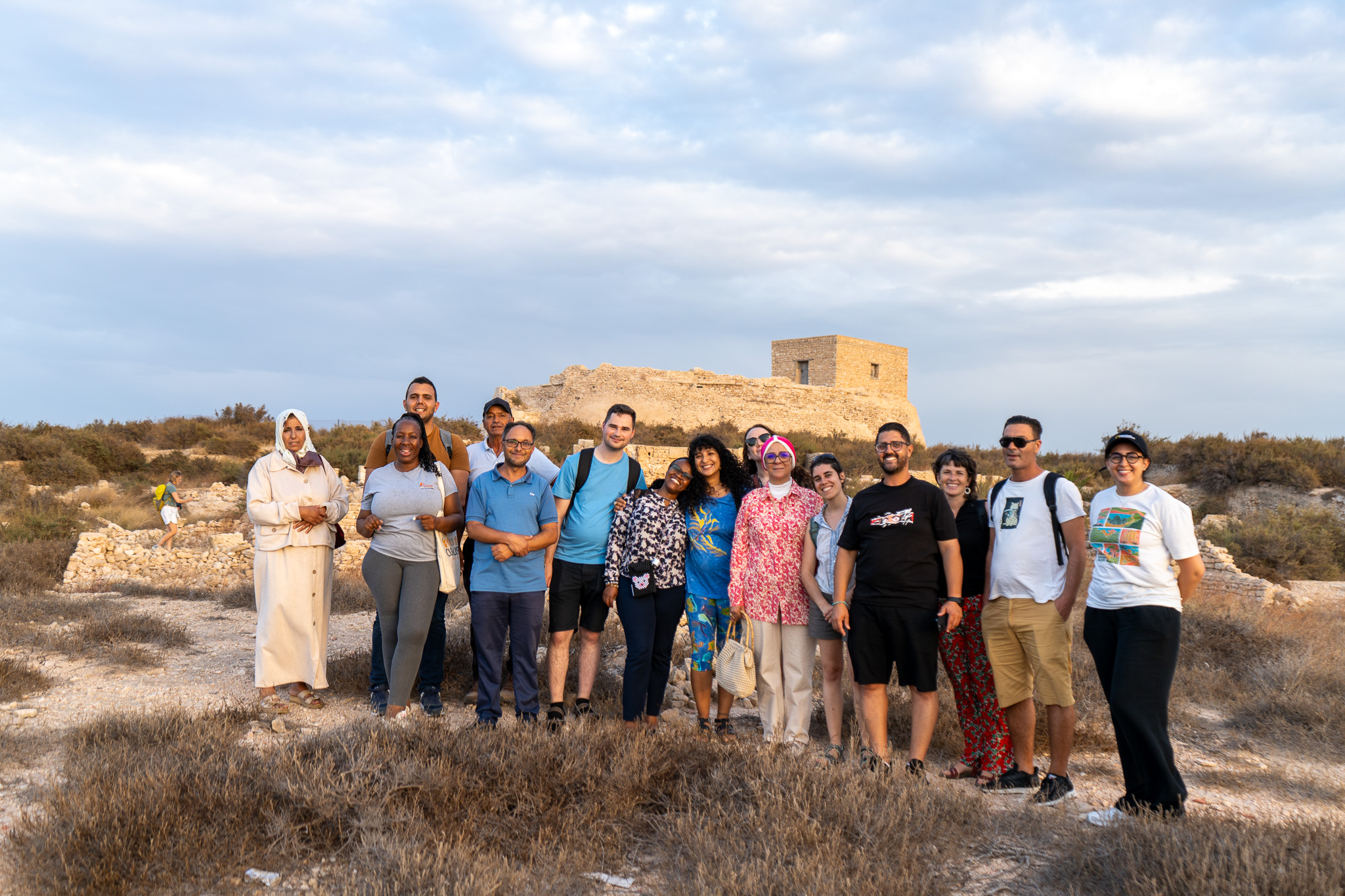
We welcomed 12 new heritage places and practices and 26 custodians into the first year of our program. Through our hands-on virtual education program, custodians strengthened their climate heritage literacy and built relationships that only deepened when they came together in-person to experience a climate risk assessment workshop firsthand. They'll also use inspiration from this experience to facilitate their own risk assessments next year. But first, they'll complete the final lessons of their educational foundation building over the early months of 2026 (the first year of our program begins and ends in March!)
Activation
From downscaling climate data to facilitating engagements with stakeholders and rightsholders, we supported nine heritage places and practices through their climate risk assessment process. Whether in the mountains of Bhutan or along the coastline of Kerkennah Island, our custodians wove together scientific, Indigenous, and local knowledge to co-create adaptation plans that will move into action in the year ahead. With their final workshops complete, they'll spend the first half of 2026 writing and publishing their climate risk assessments and adaptation plans.
.jpg)
Adaptation
Six of our heritage places and practices put the finishing touches on their climate risk assessments, with Sceilg Mhichil publishing theirs last month and the rest publishing in the new year. To help ensure they can realize their adaptation plans, we created bespoke programming to enhance their policy, communications, and fundraising skills. As they begin implementing their action plans in 2026, they remind us that community resilience is a relationship—one built through shared learning, trust, and collective action.
Amplification
-75%20(2).jpg)
We remain deeply inspired by our inaugural sites—Petra and Payo'n Binoltan - Ifugao Rice Terraces—whose work demonstrates the importance of listening to our past to build resilience for our future. Taher Falahat continues to assess, document, map, and name Petra’s ancient Nabatean terraces, laying the groundwork for future conservation and adaptation actions that protect both their structural integrity and historical significance. And Marlon M. Martin is weaving complementary efforts together across policymaking, education, and awareness-raising.
Elevating heritage on the global stage
Alongside our partners, we engaged in more than a dozen international conferences and convenings, contributing to a growing recognition of cultural heritage and plural knowledge systems as essential to effective climate adaptation. This shift was further reflected in the leadership recognition of our teammates: Andrew Potts received the World Monument Fund's 2025 Watch Award, and Dr. Salma Sabour was selected as a Lead Author for the IPCC’s Africa Chapter (AR7).
The momentum continued with tangible policy progress at COP30, thanks to the year-round work of our Heritage Adapts to Climate Alliance (HACA). Additionally at COP, our forthcoming Heritage Adapts! 3000 x 2030 campaign was selected as one of 100 official “Plans to Accelerate Solutions” and we received the Global Center on Adaptation’s Local Adaptation Champions Award for Citizen Science, affirming that culture and heritage are not afterthoughts in climate action—they’re catalysts.
2026: Our Year for Scaling Impact
While we celebrate these strides, we also recognize the scale of the challenge before us. Reaching dozens of heritage places or practices each year is not enough—we must aim for thousands. That’s why 2026 will be our year for scaling impact: expanding the reach of our collective programming by launching the Heritage Adapts! 3000 x 2030 Campaign and Community of Action alongside a robust coalition of partners.
To all our custodians, partners, supporters, and friends—thank you for building this movement with us. Together, we’re proving that heritage is not only what connects us to our past, but also what guides us toward a thriving future for all.
